

The Next Booking Treadmill
9 real-world travel marketing plays, deconstructed and adapted for independent operators, to help you break the cycle of constantly chasing the next booking and build marketing that makes future bookings easier to win


9 real-world travel marketing plays, deconstructed and adapted for independent operators, to help you break the cycle of constantly chasing the next booking and build marketing that makes future bookings easier to win
For independent travel operators, the pressure to generate the next booking never really goes away. There are targets to hit, capacity to fill and only so much time, budget and attention to work with. So naturally, the things that can have an impact now tend to move up the list.
A campaign to launch. An offer to promote. Paid activity to optimise. Emails to send. Content to get out. It’s a familiar cycle, and there’s nothing unusual about it. Much of the travel marketing playbook is designed to help operators do exactly this: capture the demand that exists and turn more of it into bookings.
The problem, though, is that despite all that effort, relatively few operators feel they’ve really cracked it. Arival’s 2026 study puts that number at 22%. Yes, out of 5,664 operators, only a small fraction considered their marketing “very effective.”
So why does all this activity still leave so many operators feeling like their marketing isn’t cutting through?
Part of the answer lies in when most travel marketing is trying to have an impact. A disproportionate amount of time, budget and attention goes towards the Last Mile: the point where travellers are already considering their options and getting closer to making a booking.
And it’s easy to see why. Demand is already there, results are more straightforward to track, and the impact of your marketing tends to show up much sooner.
But it’s also where everyone else wants the traveller’s attention. By this point, you’re competing for a relatively small pool of people who are actively looking to book. Competing operators want them. OTAs want them. Other intermediaries want them too.
And everyone is fighting for their attention across search, social, email and the platforms where travellers research and compare their options. But as it happens, when everyone is trying to reach the same people, competition goes up. And so does the cost of reaching and converting them.
So in the end, more marketing effort gets concentrated around the same people, at the same point in their journey, when competition for their attention is at its highest. And to make things worse, the traveller’s decision didn’t start there. Long before someone is actively comparing options or ready to book, they’re discovering what’s possible, forming impressions and gradually developing preferences about where to go, what to do and who they might eventually choose.
So, all in all, it’s perhaps not surprising that so few operators feel like their marketing is cutting through. They’re competing for the same pool of active demand, at the most crowded and expensive point in the journey, when travellers may already have formed preferences about who they want to book with.
So what’s the alternative?
Well, most travel operators, when not spending time converting existing demand, are already doing plenty further up the journey. Inspiring people. Building awareness. Sharing destinations and experiences. Publishing content. Sending newsletters. Staying visible and giving travellers reasons to keep paying attention.
All of that matters. Familiarity, trust, memory and preference don’t suddenly appear when someone decides they’re ready to book. They’re built over time, and this kind of marketing has an important role to play in that. The difficulty is that the further you move away from the booking, the harder things can become to pin down.
The connection to a future booking is less immediate. The return can take longer to show up. And when time and money are limited, deciding what deserves investment becomes a much harder call.
So, the question isn’t whether awareness, inspiration or staying visible matter. It’s what else is worth investing in before booking intent, why a traveller would genuinely value it, and what the business could tangibly gain from building it.
So what else can a travel business actually invest in before someone is ready to book?
After more than six years working in the travel sector, we’ve seen this come up a lot. And as it turns out, there are quite a few ways to approach it.
We’ve broken down 9 real-world examples from across the sector where businesses have approached that challenge in very different ways. Across those nine examples, some useful patterns start to emerge. We’ll pull apart the thinking behind them, bring it back to the reality of an independent operator and explore what the same principles could actually look like at a smaller, more achievable scale.
So rather than another list of campaigns to copy, think of the examples and ideas ahead as different ways to answer the same question:
What could we build before the booking that travellers would genuinely value, while leaving the business with something tangible that makes future bookings easier to win?
Now let’s look at what this actually looks like in practice.
The following 9 examples come from very different corners of the travel industry. Some help travellers overcome a barrier. Some make expertise useful before someone becomes a customer. Some turn a claim into something people can actually verify. Others create experiences, knowledge or resources that have value in their own right.
What matters here isn’t the format.
A course, research report, public event or interactive map isn’t inherently a First Mile investment simply because it exists before the booking. What matters is the job it does for the traveller, the value it creates for the business and how naturally that value connects to what the business ultimately sells.
So for each example, we’re going to pull apart six things:
We’ll start with a business that did something many travel companies would be nervous to do: teach people how to plan the very thing they could pay the company to plan for them.
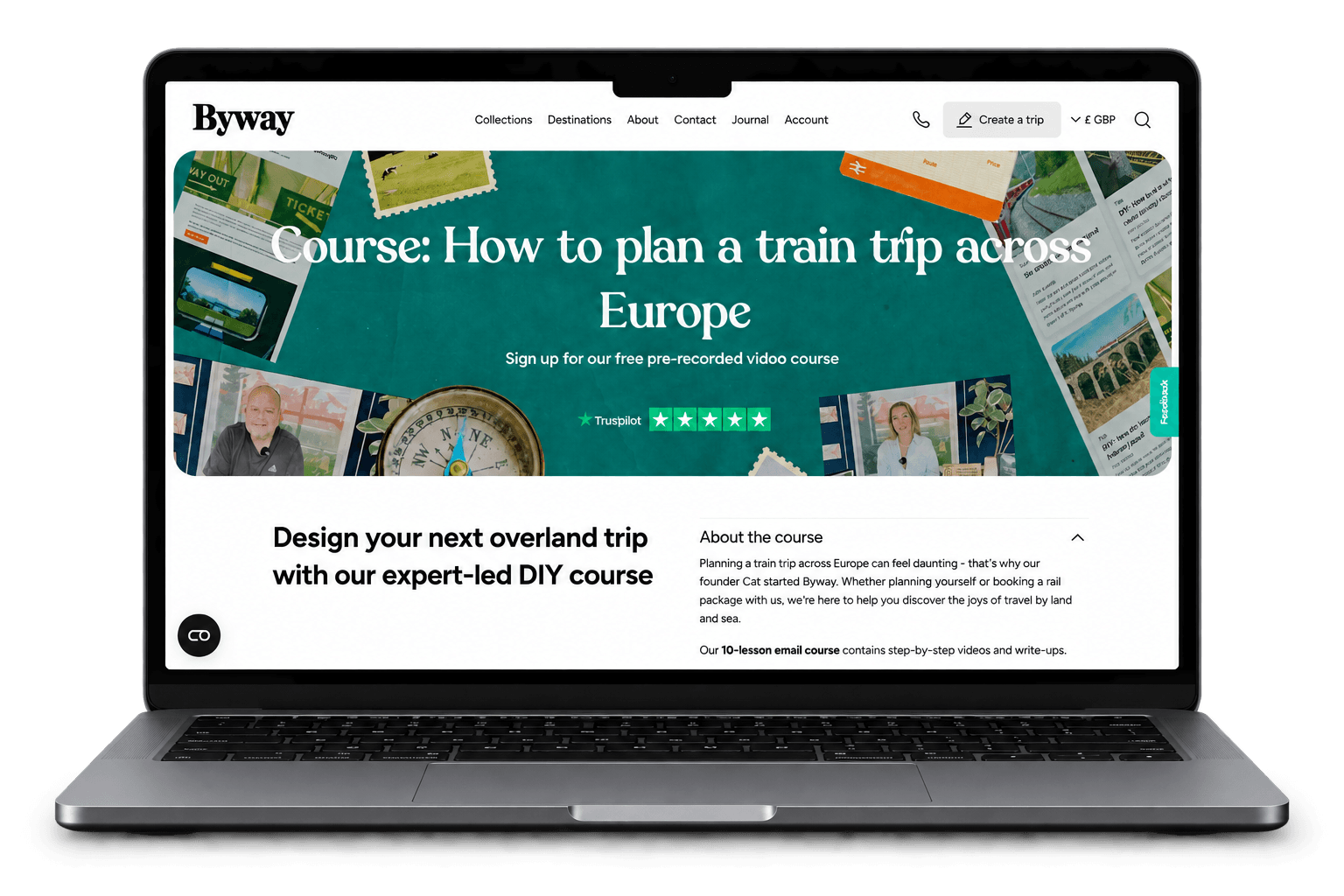
Byway sells flight-free holidays across Europe, planning the routes, accommodation and connections that turn what could be a complicated multi-stop journey into a bookable trip.
But rather than keeping that planning expertise behind the booking, Byway made a substantial part of it freely available.
Its DIY Slow Travel Course teaches travellers how to plan their own flight-free holiday. Across 10 videos, seven articles, more than 5,000 words and around 25 minutes of expert video, it covers the practical knowledge someone needs to start putting a trip together themselves.
On the surface, that creates an obvious question: why teach people how to do something they could pay Byway to do for them?
This isn’t simply a collection of destination inspiration or articles about the benefits of slow travel.
Byway has taken expertise from inside the business and turned it into something a traveller can actually use. Someone who wants to organise their own trip can learn from the same kind of knowledge Byway uses when building its holidays.
The course grew out of Byway’s wider effort to help people travel without flying, including its Maps product, which had already been used by more than 300,000 people to explore and dream about flight-free journeys.
So the value exists whether or not someone goes on to book with Byway.
Planning an overland trip can be part of the appeal, but it can also be one of the things standing in the way.
Routes need connecting. Trains, ferries and buses may need coordinating. Accommodation has to fit around the journey. And once several destinations or transport systems are involved, the amount of research and decision-making can grow quickly.
The course helps reduce that barrier by giving someone the knowledge to start doing it themselves.
For the traveller who enjoys planning, that knowledge has immediate practical value. They leave more capable of creating their own trip than they were before.
Giving that expertise away doesn't remove Byway from the picture. It gives travellers direct experience of what Byway knows.
Instead of simply claiming expertise in flight-free travel, the business demonstrates it by helping someone solve a real part of the problem.
It can also expand the number of people capable of considering this kind of travel in the first place. If complexity is one of the barriers preventing someone from taking an overland holiday, making the category easier to understand can help make participation feel more achievable.
This is where the example becomes particularly interesting.
The more someone understands what goes into planning a complex flight-free journey, the easier it becomes to see what they would actually be paying Byway for.
A traveller can absolutely take the knowledge and organise the trip themselves.
But another traveller may work through the same material and decide they don't want to research every connection, coordinate every part of the itinerary or deal with disruption and rebooking themselves.
The free course and the paid service therefore solve related problems at different levels.
Byway gives away the knowledge required to understand and attempt the task. Its paid proposition removes much of the time, complexity and risk involved in actually doing it.
The course doesn't disappear when a campaign ends.
It becomes a reusable expression of Byway's expertise that can continue helping future travellers. The knowledge has been turned from something held internally by the team into an asset people can discover, use, share and return to.
And because the resource is directly connected to the problem Byway solves commercially, the distance between useful free value and the paid proposition remains relatively short.
The distinction is simple: it helps someone do the thing.
A generic article about the joys of slow travel might inspire someone. A destination guide might give them ideas. Both can be valuable.
But the DIY course goes further. It transfers enough of Byway's expertise for someone to make progress without becoming a customer.
The resource doesn't need to hide the difficult parts of planning to protect the sale. In many ways, exposing that complexity helps make Byway's paid role clearer.
The lesson isn't that every travel operator should create a course.
It's that expertise sitting inside a travel business can sometimes become valuable before the booking itself. And giving travellers access to that expertise doesn't necessarily weaken the reason to buy. Done well, it can make the value of having someone do the difficult part for you much easier to understand.
Byway shows what can happen when you give travellers access to expertise they would normally have to pay for.
But sometimes the barrier before booking isn’t knowing how to do something. It’s knowing whether you can trust an important claim in the first place. That’s where Wheel the World takes a very different approach.
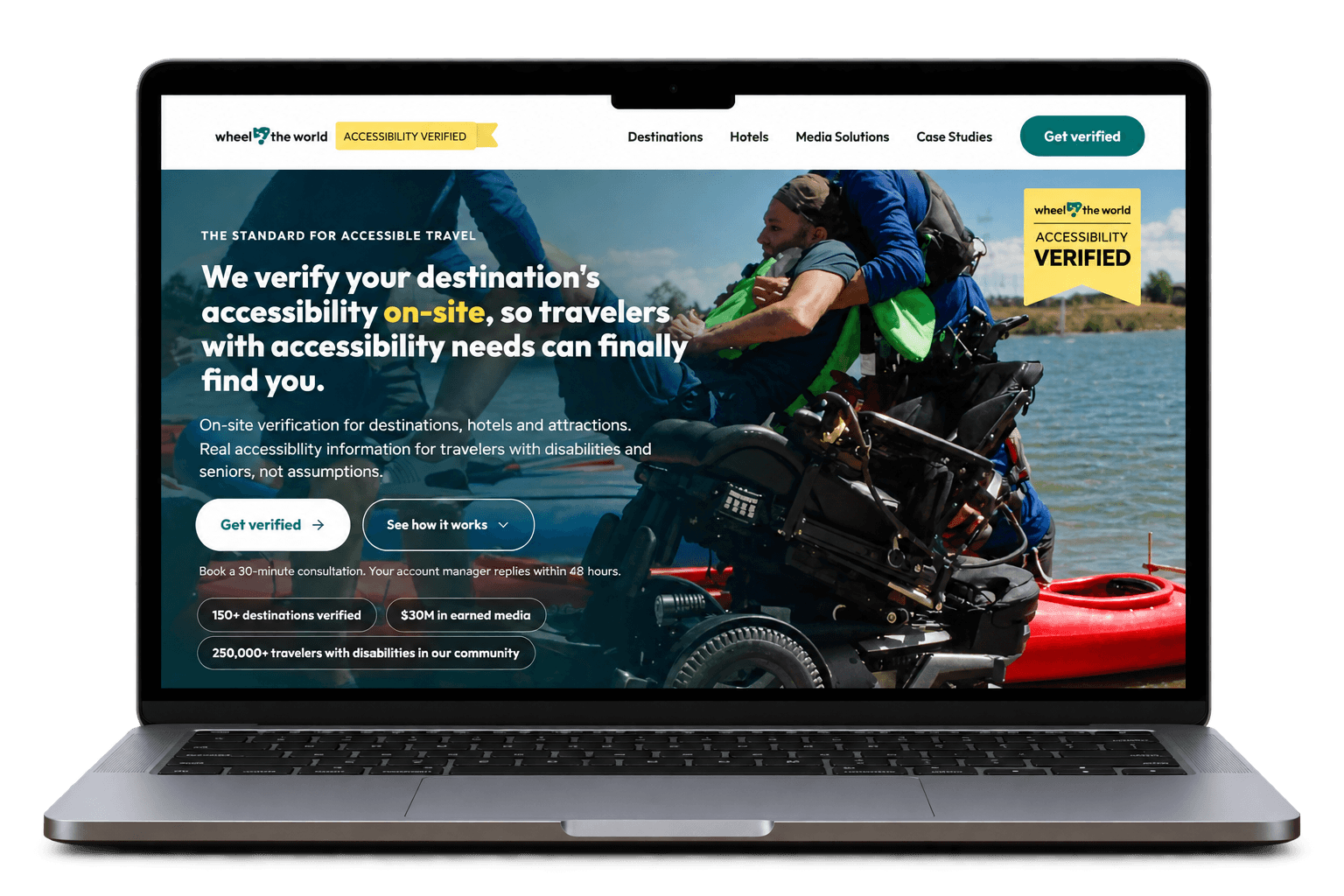
For a traveller with accessibility needs, choosing a hotel, tour or experience can involve a very different kind of uncertainty.
A property might describe itself as “accessible.” A tour might say it can accommodate wheelchair users. An attraction might display an accessibility icon.
But those claims don't necessarily answer the practical questions someone needs answered before deciding whether the experience will actually work for them.
Wheel the World tackles that problem by replacing a broad promise with detailed, verified accessibility information.
Wheel the World created its Accessibility Mapping System, a structured way of collecting detailed accessibility information from hotels, attractions and experiences.
Rather than reducing accessibility to a simple yes or no, the system captures hundreds of specific data points about the physical experience of a place.
That information can cover things such as entrances, bathrooms, bedrooms, pathways, transportation and other facilities a traveller may need to understand before making a decision.
The resulting information is then made available to travellers through Wheel the World's platform, allowing them to assess whether a particular option matches their individual accessibility needs.
For someone without accessibility requirements, a vague description or missing detail might be an inconvenience.
For someone who relies on particular accessibility features, it can determine whether the trip is possible at all.
“Wheelchair accessible” doesn't tell someone whether a doorway is wide enough for their chair, whether there are steps between important areas, what the bathroom configuration looks like or whether the transport involved in an experience will work for them.
Wheel the World gives travellers more of the information they need to make that judgement themselves.
The value isn't simply more information. It's greater certainty around a decision where getting it wrong can have significant consequences.
Every accessibility assessment also creates something valuable for the business: structured knowledge about the accessibility of the travel products it sells.
Instead of relying entirely on the descriptions supplied by individual providers, Wheel the World builds its own layer of information around the travel experience.
As more places are assessed, that knowledge becomes an increasingly useful part of the platform itself.
It also gives Wheel the World something much stronger to demonstrate than a general commitment to accessible travel. Its proposition is visible in the information travellers can actually use.
The connection is unusually direct. The information helps a traveller decide whether a hotel, activity or destination can meet their needs. Wheel the World then helps them find and book accessible travel based on those needs.
So the useful resource and the commercial proposition aren't two disconnected activities.
The same accessibility knowledge that creates value before the booking also helps Wheel the World match travellers with appropriate travel options when they are ready to book.
Each assessment leaves behind structured accessibility data.
It expands a body of information that can continue helping future travellers make decisions.
With each place mapped, Wheel the World isn't simply producing another piece of content. It's adding to an accessibility dataset that sits at the heart of what makes the service useful.
Wheel the World isn't asking travellers to take an important brand claim at face value.
It's turning that claim into something they can inspect.
There is a big difference between saying: “We make travel more accessible.” and giving someone the specific information they need to determine whether a trip will actually be accessible for them.
Travel businesses make claims all the time: accessible, sustainable, family-friendly, locally rooted, expert-led, suitable for beginners.
Some of those claims matter enormously to the decision.
The opportunity isn't necessarily to say them more convincingly. It may be to ask whether you can turn the claim into evidence the traveller can actually use.
Wheel the World shows how something travellers would normally have to take on trust can be turned into evidence they can actually use.
But what if, instead of helping people understand or verify the experience before booking, you let them experience a meaningful part of the brand for themselves?
That’s exactly what 21c Museum Hotels has built into its business.
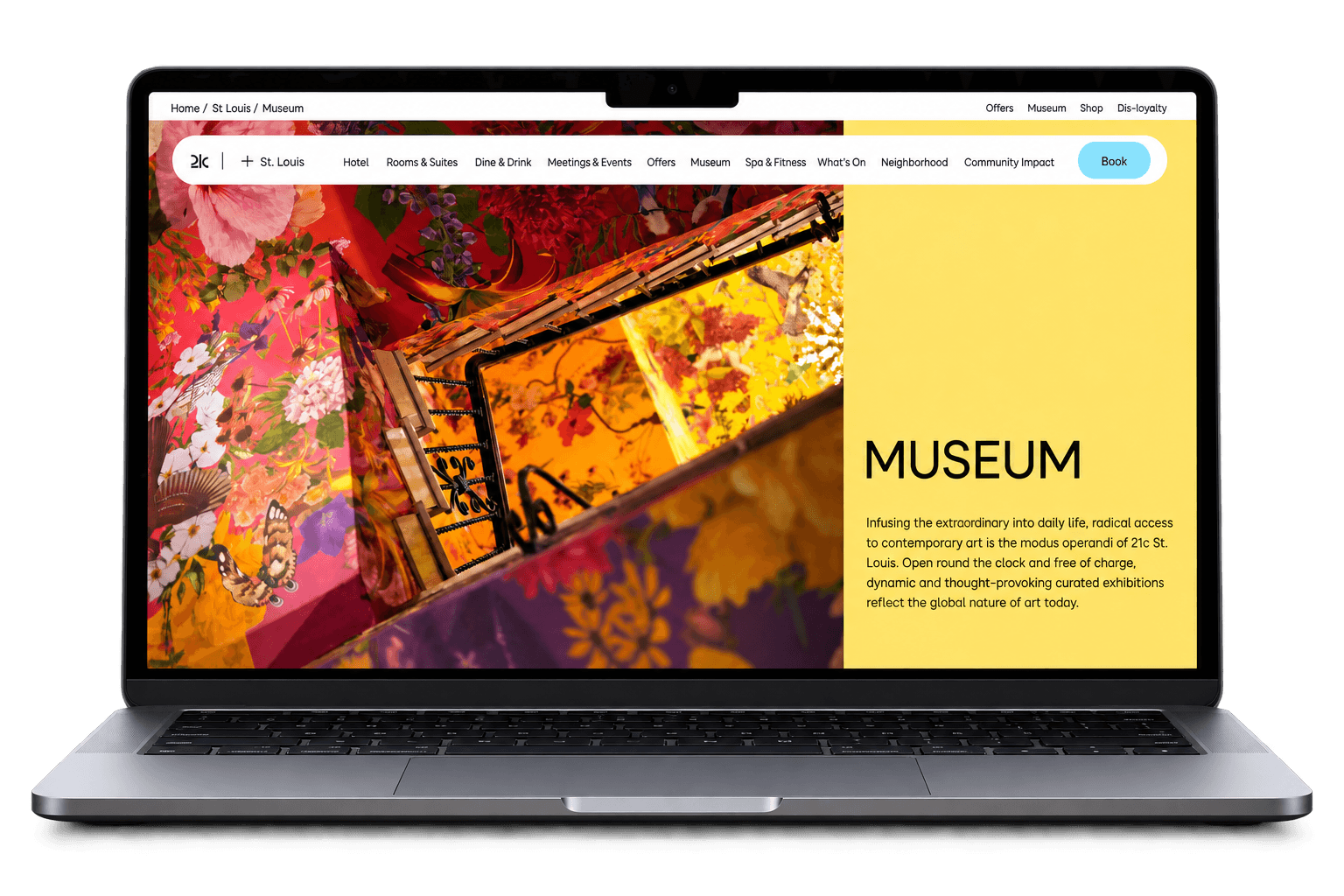
21c Museum Hotels takes a very different approach to creating value before someone becomes a customer.
Its hotels are also contemporary art museums. The exhibitions aren't reserved for overnight guests or hidden behind the hotel experience. The galleries are free and open to the public, giving people a reason to walk through the doors whether or not they have any intention of booking a room.
21c didn't simply decorate its hotels with contemporary art.
It made the museum a genuine public-facing part of the proposition, with rotating exhibitions, installations and cultural programming that people can experience independently of a hotel stay.
Someone doesn't need to become a guest before accessing this part of the brand. A local resident, visitor or art enthusiast can encounter 21c simply because the exhibition itself is worth visiting.
The business has effectively taken something central to its identity and made it available as a standalone experience.
There is already a reason to engage: they can visit a contemporary art museum for free.
That creates a very different relationship from conventional hotel marketing. Rather than asking someone to read about the property, look through photographs or imagine what staying there might feel like, 21c gives them somewhere to go and something worthwhile to experience.
For someone who later needs accommodation in that city, their first meaningful encounter with the hotel may therefore have happened long before they started comparing places to stay.
21c gets something many hotels spend considerable amounts of marketing budget trying to create: a reason for people to interact with the brand when they aren't looking for a hotel.
The museum brings people physically into the property and allows them to experience the atmosphere, spaces and point of view of the brand firsthand.
And because the experience is genuinely useful or interesting without requiring a booking, 21c isn't dependent on manufacturing a promotional reason for people to pay attention.
The museum gives it one.
The museum isn't an unrelated attraction bolted onto the hotel.
Contemporary art is part of what defines the 21c experience. The galleries, installations and programming are integrated into the properties themselves.
So someone visiting the museum is already experiencing a meaningful part of what distinguishes staying at 21c from staying somewhere else.
They haven't sampled a hotel room for free. But they have experienced part of the world the hotel is inviting guests into.
That creates a natural bridge to the commercial proposition without requiring the museum visit itself to behave like a sales promotion.
The investment creates more than a single interaction.
There is a physical cultural destination people can revisit. Rotating exhibitions and programming create new reasons to return. Artists have a platform for their work. Local communities have a reason to use and engage with the space beyond staying overnight.
And for 21c, the museum becomes part of the brand itself rather than another temporary marketing campaign that disappears when the media budget stops.
The investment keeps creating encounters with the business outside the normal hotel booking cycle.
21c isn't producing content about its interest in contemporary art.
It has built something people interested in contemporary art can actually experience.
A hotel could publish artist interviews, create cultural city guides, post exhibition
recommendations or fill its social channels with art. Those things could all be worthwhile.
21c goes considerably further. It uses the business itself to create a public cultural experience that has value independently of whether somebody books a room.
The lesson isn't that an independent hotel should build a museum.
It's that something meaningful about the proposition doesn't always have to remain locked behind the purchase. A travel business can sometimes take a genuine part of what makes it distinctive and create a way for people to experience it before they ever have a reason to buy.
21c shows what can happen when a meaningful part of the proposition is made available before someone ever needs the core product.
Ace Hotel takes that idea in a different direction. Rather than opening up part of the existing experience, it uses the resources of the business to help other people create something new.
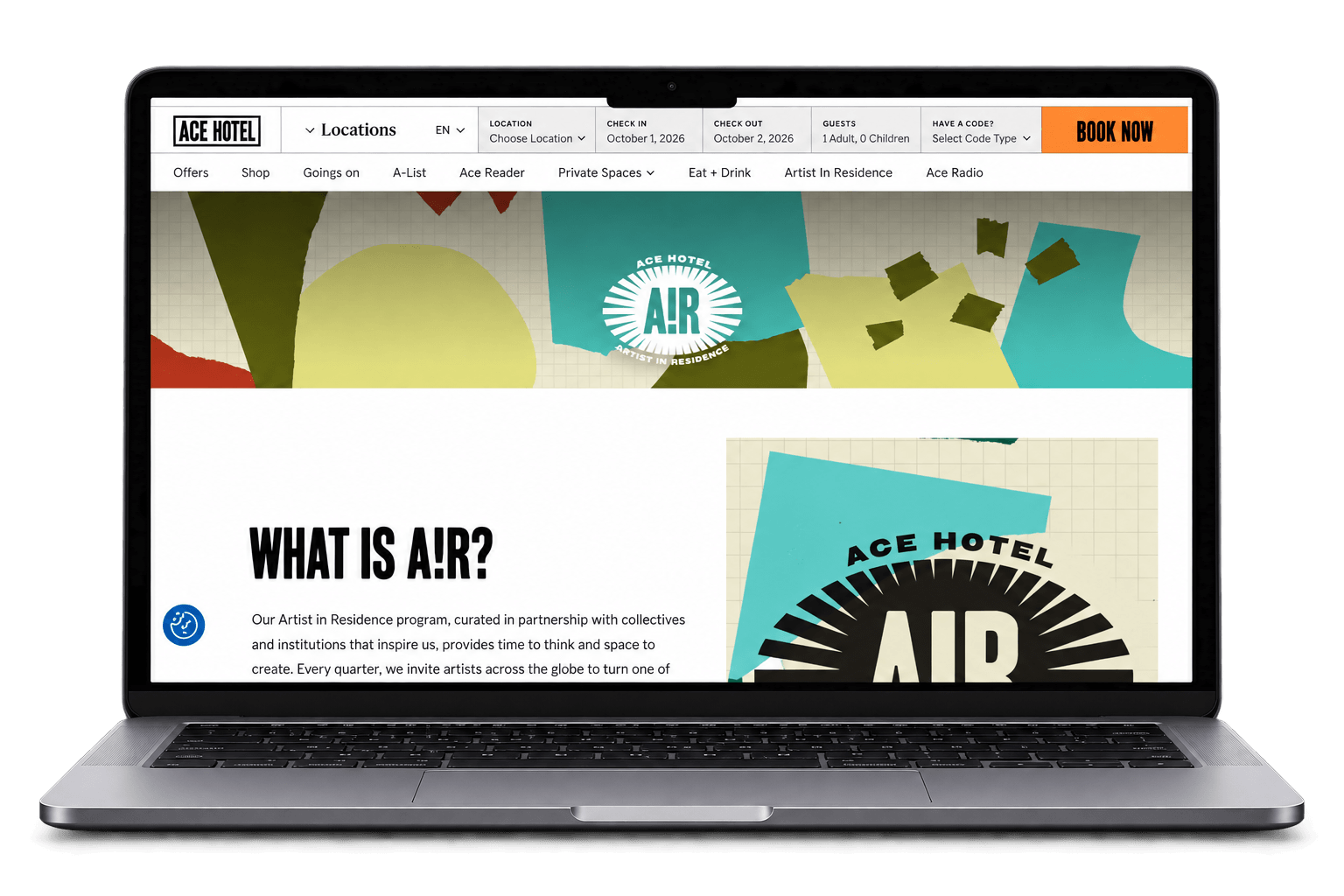
Ace Hotel has long positioned itself around the creative communities surrounding its properties. But rather than simply borrowing from those communities for the brand, its Artist in Residence programme gives artists access to something the business already has: space.
Selected artists are invited to spend time at an Ace property and create work during their stay. What comes out of that residency can then be shared through exhibitions, performances or other public-facing work.
Ace created a residency programme that turns hotel rooms and spaces into temporary places for creative work.
The hotel provides the setting and resources. The artist decides what to make.
That distinction is important because the programme isn't simply commissioning branded content from artists or asking them to decorate the hotel.
Ace is using an asset already sitting inside the business, its physical space, to enable somebody else to create something that has value beyond promoting the hotel itself.
The result is different each time because the value comes partly from the people invited into the programme rather than being entirely produced by Ace.
Someone doesn't need to be considering a hotel stay to find the resulting work interesting.
They might encounter an exhibition, performance, piece of writing, photography or another creative output because they are interested in the artist or the work itself.
That gives Ace a place in someone's world for reasons beyond accommodation.
And importantly, the value isn't dependent on the traveller appreciating the marketing. The creative work is the thing of value.
Ace has simply helped make it possible.
The programme gives Ace a credible way to participate in the creative culture it wants the brand to be associated with.
Rather than repeatedly telling people that Ace is a hotel for creative people, the business can demonstrate that relationship through what it enables.
It also creates connections with artists and local creative communities, generates new work and gives people reasons to encounter the brand outside the normal hotel booking journey.
Ace isn't simply using culture as an aesthetic. It is contributing resources to it.
The commercial connection here is less direct than in examples such as Byway or Wheel the World.
Someone isn't likely to see a piece of work created during a residency and immediately decide they need a hotel room.
But that isn't really the role the programme plays.
Ace's hotels sell more than somewhere to sleep. Their appeal is partly built around the spaces, people and cultural environment surrounding them.
The residency programme makes that proposition tangible.
If a traveller later encounters Ace while choosing where to stay, the creative identity they're being sold isn't something that exists only in the copy on the booking page. There is a body of activity behind it.
Each residency can leave behind creative work, relationships, stories and connections with the communities around the hotel.
More importantly, the programme itself can accumulate meaning over time.
One residency might create a temporary reason to pay attention. Repeated residencies establish a pattern: this is something the business consistently chooses to support.
That makes the value different from a one-off artist collaboration designed around a campaign launch.
The individual outputs may change, but the relationship between the hotel and the creative community can continue building.
Travel brands regularly borrow from the cultures surrounding them.
They photograph local artists. Interview makers. Produce neighbourhood guides. Commission illustrations. Fill social feeds with the people and places that make a destination interesting.
Ace's Artist in Residence programme changes the relationship.
Instead of asking, “How can this creative community give us something interesting to market?”, the business is also asking what it can contribute that allows creative work to happen in the first place.
That is the transferable idea.
An operator doesn't need an artist residency to apply it. The more interesting question is whether the business has resources, access, relationships, spaces or expertise that could enable other people to create something worthwhile.
Sometimes the First Mile opportunity isn't creating another thing for your audience to consume.
It's creating the conditions for someone else to contribute something they genuinely care about.
Ace Hotel shows how a travel business can use what it already has to help others create something valuable, giving people another reason to engage with the brand beyond the core product.
The next example brings us much closer to that core product. Instead of enabling someone else to create something, Rick Steves gives travellers a genuinely useful piece of the experience they would otherwise pay for.
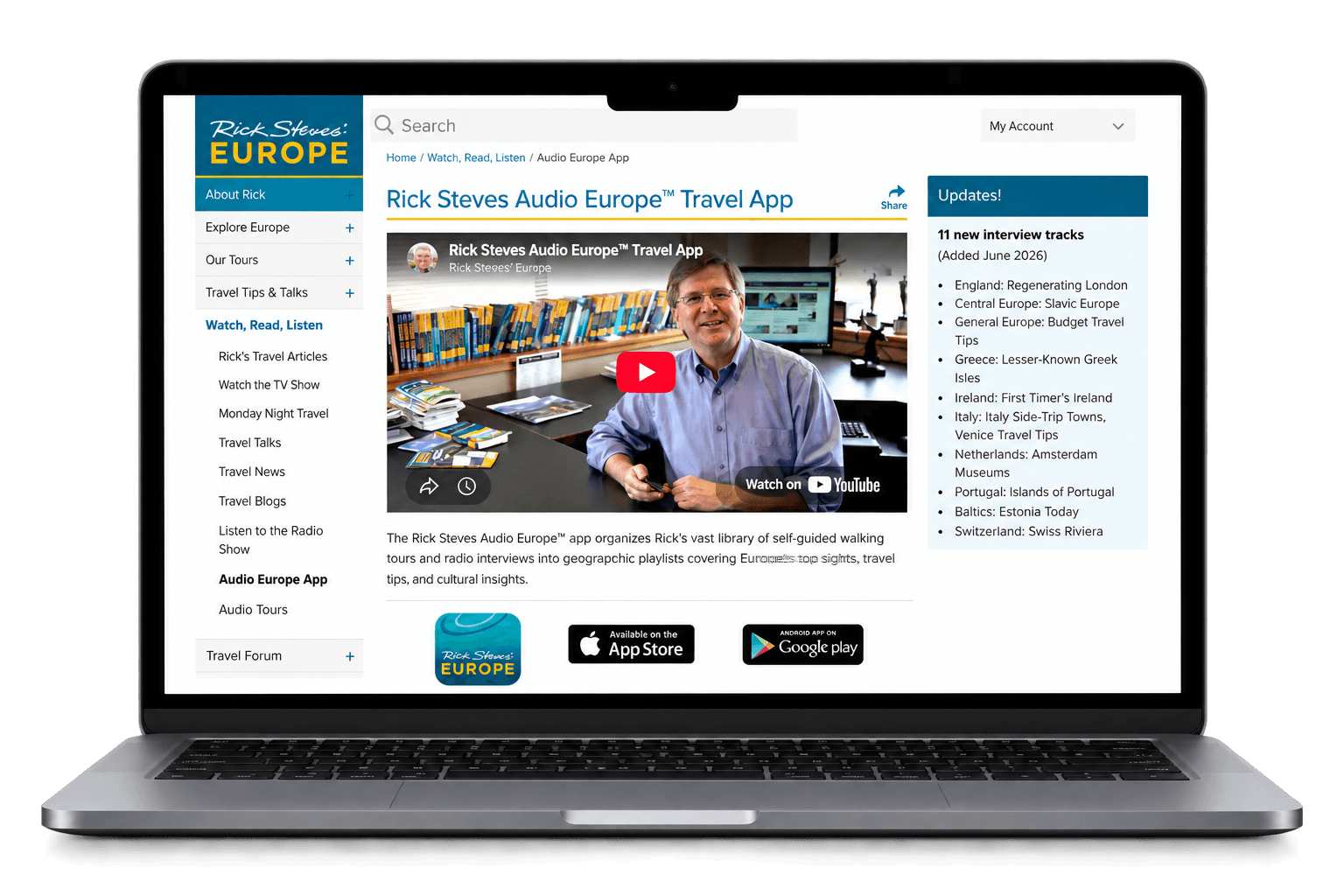
Rick Steves sells guided European tours, guidebooks and travel products built around decades of destination expertise.
But travellers don't have to buy any of them to experience some of that expertise for themselves.
Through the Rick Steves Audio Europe app, travellers can access free self-guided audio tours covering museums, neighbourhoods, historic sites and city walks across Europe. Download one, put in your headphones and Rick Steves can effectively become your guide for part of the day.
Rick Steves took something central to the paid proposition, expert interpretation of a destination, and packaged a useful portion of it into a free experience travellers can use while they're actually travelling.
These aren't simply podcasts discussing European destinations from a distance.
Many of the audio tours are designed to accompany someone through a specific place. The traveller follows the route, listens at particular points and uses the commentary to understand what they're seeing around them.
That makes the resource functional. It isn't only telling someone what a Rick Steves experience might be like. It's allowing them to have a small version of one for themselves.
Arriving somewhere is easy. Understanding what you're looking at can be much harder.
A traveller might be standing in front of an important building, walking through a historic neighbourhood or moving through a museum without knowing the stories, details or context that make the place interesting.
The audio tours help close that gap.
And because they can be downloaded and used independently, the traveller gets something immediately practical: expert guidance through a place they already want to explore, without needing to join a tour or make a purchase.
The value is therefore contained within the experience itself. Even someone who never spends money with Rick Steves can still have a better day because the resource exists.
Every audio tour gives someone direct experience of the way Rick Steves approaches travel.
Travellers hear the commentary, follow the recommendations and experience how the business interprets a destination rather than simply reading claims about its expertise.
That matters because expertise can be difficult to judge before buying a guided experience.
Giving someone a useful sample makes that expertise much more tangible.
It also gives Rick Steves a reason to be present during the trip itself, at precisely the moment when the traveller is exploring the places the business specialises in.
The connection is straightforward because the free resource and paid products draw from the same underlying expertise.
Someone listening to a free walking tour isn't receiving the full experience of travelling on a Rick Steves guided tour. There is no tour leader managing the journey, group experience, itinerary, accommodation or wider support.
But they are experiencing one component of the value: being shown a place through the knowledge and perspective of someone who understands it.
The free experience therefore doesn't need to artificially lead into a sale.
It gives the traveller enough of the real thing to understand what that expertise can add to their trip. The paid proposition simply delivers considerably more of it.
The audio tours become a reusable library of destination expertise.
Once produced, they can continue accompanying travellers through the same places rather than disappearing when a campaign ends.
Together, they also create something larger than any individual tour: a growing collection that travellers can return to as they visit different European destinations.
That gives Rick Steves an ongoing role in the traveller's journey. Someone who uses one tour successfully in Rome has a reason to look again when they later visit Paris, Florence or another destination covered by the library.
The traveller doesn't consume the audio tour because they want to learn about Rick Steves.
They use it because they want to understand the place they're standing in.
That difference is important.
A promotional video could demonstrate the quality of Rick Steves' tours. A blog could explain why having an expert guide improves a trip. Testimonials could tell prospective customers how knowledgeable the guides are.
The audio tours let the traveller experience some of that value directly.
And that creates a useful principle beyond this particular example.
Sometimes a business doesn't need to explain its paid experience more convincingly. It can take a meaningful, self-contained piece of that experience and make it genuinely useful before someone ever considers buying the whole thing.
Rick Steves gives travellers a useful piece of the experience itself before they ever pay for the full thing.
Context Travel takes expertise in another direction, turning the knowledge behind its tours into something people can engage with whether or not they have a trip planned.
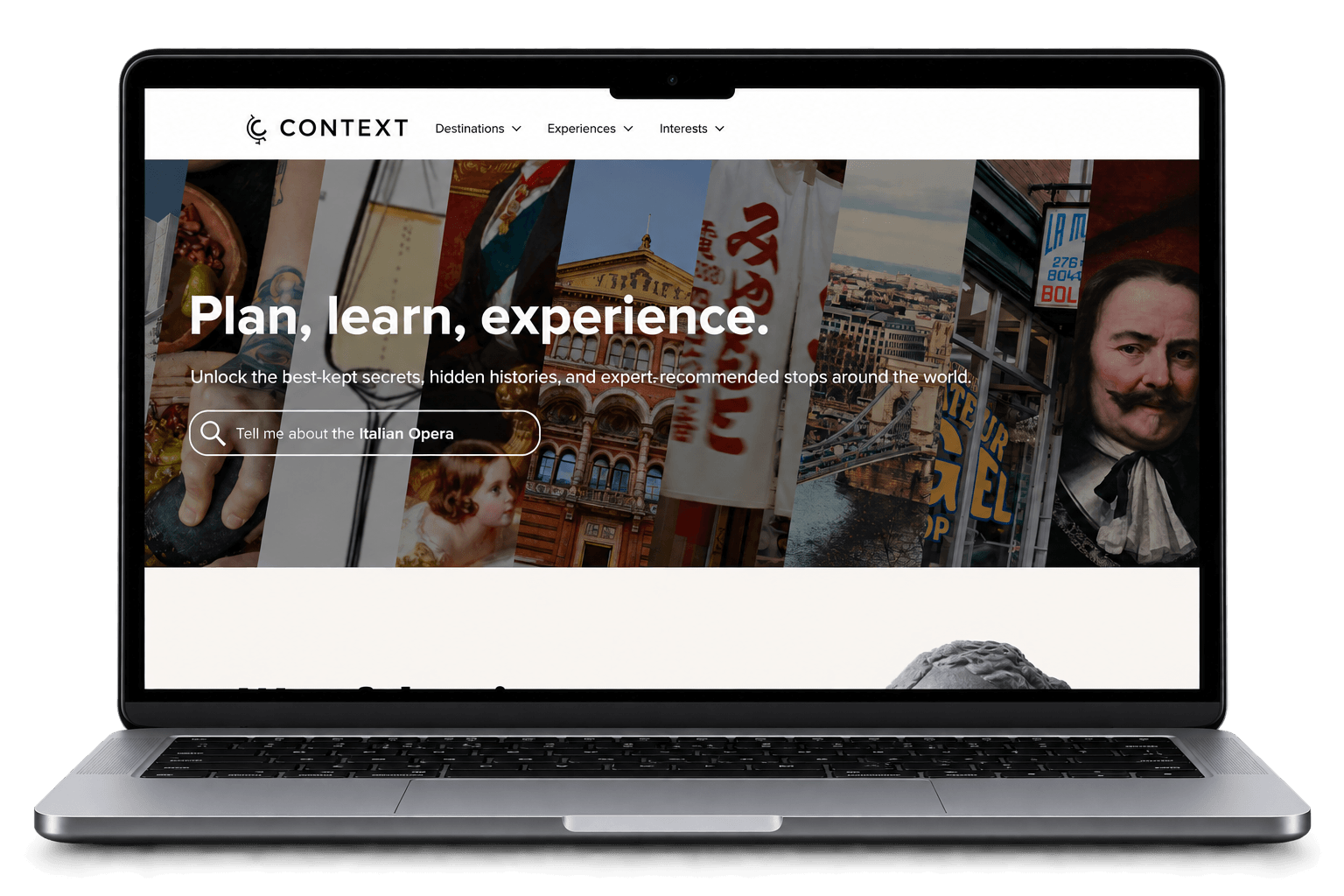
For some travellers, the interest in a place starts long before there’s a trip on the horizon.
They might be fascinated by Ancient Rome, Renaissance art or European architecture without having any immediate plans to travel.
Through Context Learning, Context gives people a way to explore those interests from home, through the same kind of specialist knowledge that sits behind its tours.
Context Travel is known for expert-led tours delivered by specialists in fields such as history, archaeology, art and architecture.
Context Learning takes that same depth of expertise and turns it into online seminars and courses covering destinations, historical periods, cultural movements and other subjects connected to the places Context operates in.
That changes the role of the expertise.
It no longer exists only within a walking tour someone experiences after arriving at a destination. Someone interested in Ancient Rome, Renaissance Florence or European art can access that knowledge independently of travelling there.
The expertise becomes valuable beyond the trip itself.
People don't suddenly become interested in history, food, architecture or art because they've booked a holiday.
Often those interests already exist.
Someone might spend years reading about Ancient Rome before visiting Italy. Another person might be fascinated by Renaissance art without having any immediate plans to visit Florence.
Context can serve that curiosity now.
The traveller doesn't need to manufacture a reason to engage with the business. If the subject is interesting enough, the learning experience provides its own reason.
And if that interest eventually develops into a trip, they arrive with greater understanding of the place and potentially a stronger desire to experience what they've been learning about firsthand.
Context gets to demonstrate the depth of expertise sitting behind its tours without waiting for someone to become a customer first.
That's particularly valuable for a proposition built around expert interpretation.
It's easy for a travel company to describe its guides as knowledgeable or expert-led. Context can let someone experience that knowledge directly.
It also gives the business a reason to maintain a relationship with people outside the relatively narrow window in which they're actively researching and booking travel.
Someone can engage with Context because they're interested in a subject today, not because they need a tour tomorrow.
The connection comes from the expertise itself.
The people and knowledge that make Context Learning valuable are closely related to what makes a Context tour valuable.
But the two experiences serve that expertise differently.
An online seminar might help someone understand the history of Ancient Rome. A tour can put them physically inside that history, walking through the places they've learned about with an expert who can interpret what they're seeing.
So Context doesn't need to force every learning experience towards a booking.
The learning has value independently. But when someone does decide to travel, the business already has a credible place in their mind as somewhere they can go for deeper understanding of the destination.
Context is building more than individual pieces of educational content.
Over time, seminars and courses create a growing body of specialist knowledge that can be accessed independently of any particular departure, destination visit or booking window.
That gives the expertise inside the business a longer useful life.
Instead of being delivered once to the people standing on a particular tour, knowledge can be captured, packaged and made useful to a much wider audience.
It also creates more ways for someone to enter and remain within the world of Context. They might discover the business through a subject they're interested in, learn from several experts over time and eventually encounter the travel proposition later.
Context isn't simply creating content about the destinations it sells.
It's asking whether the expertise that makes its travel experiences valuable could itself become something people value.
That's a significant distinction.
A blog post about Roman history might attract someone searching for information. A social post about Renaissance art might keep the brand visible. Both can play a useful role.
Context goes further by turning specialist knowledge into a structured experience someone deliberately chooses to spend time learning from.
And that creates a different First Mile opportunity.
Travel businesses often contain expertise that only becomes visible once somebody buys: guides who know extraordinary amounts about a place, naturalists who understand a particular ecosystem, chefs who know a regional cuisine, or specialists who have spent decades working in a destination.
Context shows that some of that expertise doesn't have to wait for the trip. It can become something valuable in its own right, giving people a reason to enter the world of the business long before they have somewhere to go.
Natural Habitat Adventures takes a different approach. Instead of building around what the business knows, it builds around something its customers already care deeply about: wildlife and nature.
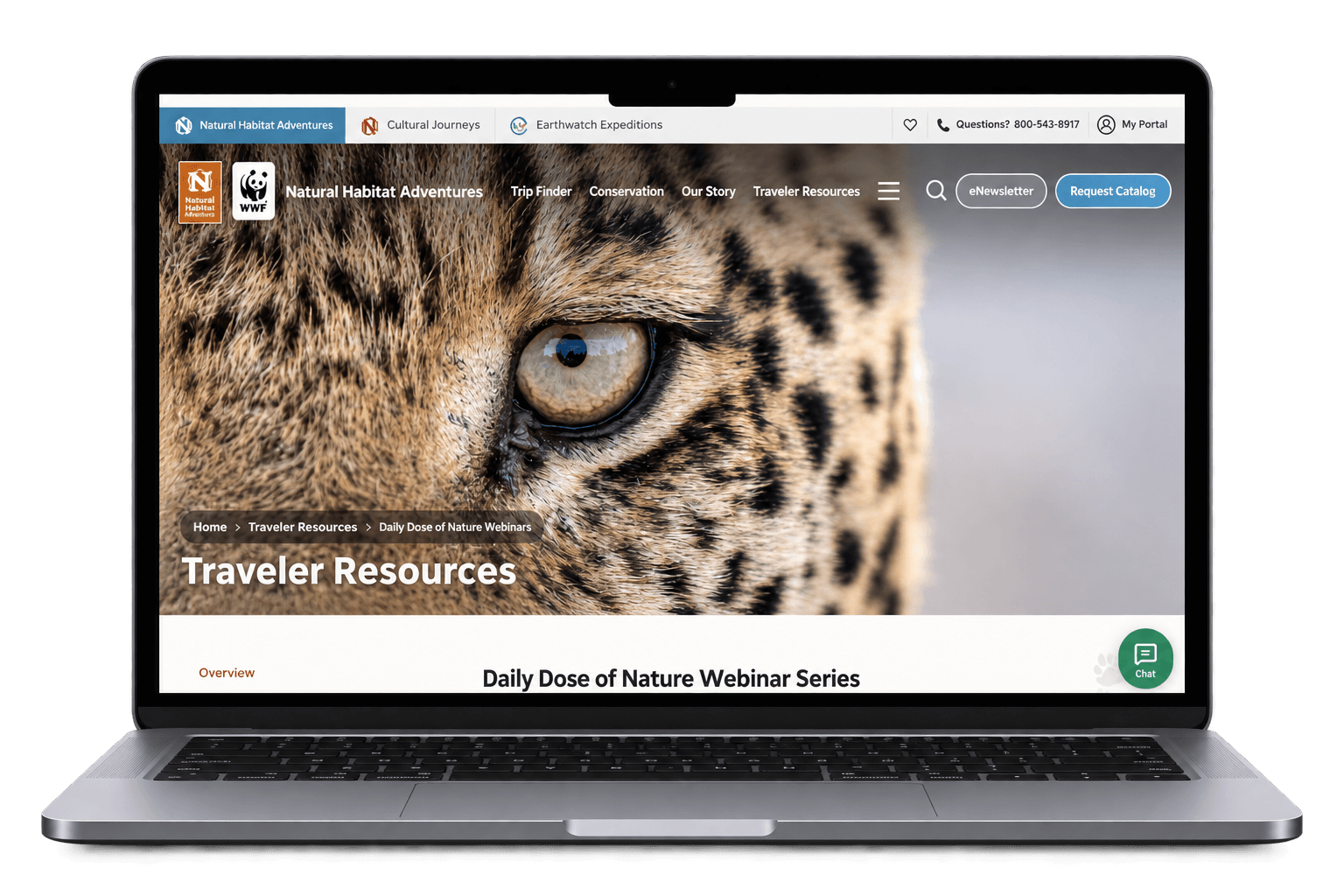
An interest in wildlife and nature doesn’t suddenly appear when someone starts planning a trip.
For many people, it’s something they care about all year round.
And that gives Natural Habitat Adventures something to build around long before someone is thinking about where to travel next.
Natural Habitat Adventures specialises in nature and wildlife expeditions, from polar bear encounters to African safaris and trips to the Galápagos.
Its Daily Dose of Nature programme gives people regular opportunities to engage with the natural world from home through live online presentations led by naturalists, expedition leaders, photographers, scientists and other experts.
The subjects extend beyond individual Nat Hab itineraries. People can tune in to learn about wildlife behaviour, ecosystems, conservation, photography and destinations from people who spend their careers working in and understanding the natural world.
So rather than waiting until someone starts researching a wildlife holiday, Nat Hab creates something valuable for the much larger group of people who simply love wildlife.
Someone interested in polar bears doesn't need to be planning a trip to Churchill to want to learn more about them.
Someone fascinated by wolves, whales, elephants or conservation doesn't need an upcoming holiday to justify spending time with those subjects.
That is what makes the programme useful so early in the journey.
The value exists around the interest itself.
For someone who loves wildlife, hearing directly from a naturalist who has spent years observing a particular species can be worthwhile regardless of whether they ever travel with Nat Hab.
And because the subjects continually change, there is a reason to come back that has nothing to do with another offer, departure or booking deadline.
Nat Hab gets to build a relationship with people around the very thing that ultimately creates demand for its trips.
Instead of needing a traveller to first decide, “I want to take a wildlife holiday,” the business can become relevant much earlier through, “I love wildlife.”
That considerably expands the moments in which the brand can be useful.
It also allows Nat Hab's naturalists and expedition leaders to demonstrate the depth of knowledge behind the trips. People aren't simply being told that the company has exceptional guides. They can spend time learning from them before ever becoming customers.
The connection doesn't need to be manufactured because the same passion sits underneath both experiences.
Someone watches a presentation because they're fascinated by the natural world.
Someone books a Nat Hab expedition because they want to experience that natural world firsthand.
The webinar doesn't need to end with a hard transition into “book this trip.” Repeated exposure to wildlife, places and experts can itself deepen someone's interest in experiencing those things beyond a screen.
And if that interest eventually becomes travel intent, Nat Hab isn't arriving for the first time alongside every other operator competing for the booking.
The traveller may already know the people, expertise and point of view behind the business.
The most important thing accumulating here isn't simply a library of webinars.
Nat Hab is creating an ongoing relationship with an audience around a shared interest.
Each session gives people another reason to return, another expert to encounter and another part of the natural world to become interested in.
Over time, the business isn't only building awareness of Nat Hab. It is creating a place people can repeatedly go to feed the passion that its commercial proposition ultimately serves.
That relationship can exist between trips, before someone's first trip and even for people who may never become customers.
Travel marketing often starts with the product.
Here is the destination. Here is the itinerary. Here is the departure. Here is why you should go.
Nat Hab starts one level underneath that.
Why does someone want to see the Galápagos in the first place? Why might they dream about seeing polar bears in the wild? Why would they spend thousands travelling across the world to encounter an animal in its natural habitat?
Because they already care about nature.
Daily Dose of Nature gives the business something valuable to contribute to that interest before a particular trip enters the conversation.
That's what makes the principle different from simply publishing more destination inspiration.
The opportunity is to identify the passion, curiosity or interest that creates demand for what you sell, and ask whether your business can genuinely contribute to that world even when nobody is shopping for the product yet.
Natural Habitat Adventures shows how a business can stay relevant by serving the passion that ultimately creates demand for what it sells.
Flash Pack takes us somewhere different again. Instead of giving travellers something to experience, learn from or return to, it uses what it understands about its audience to create new knowledge about them.
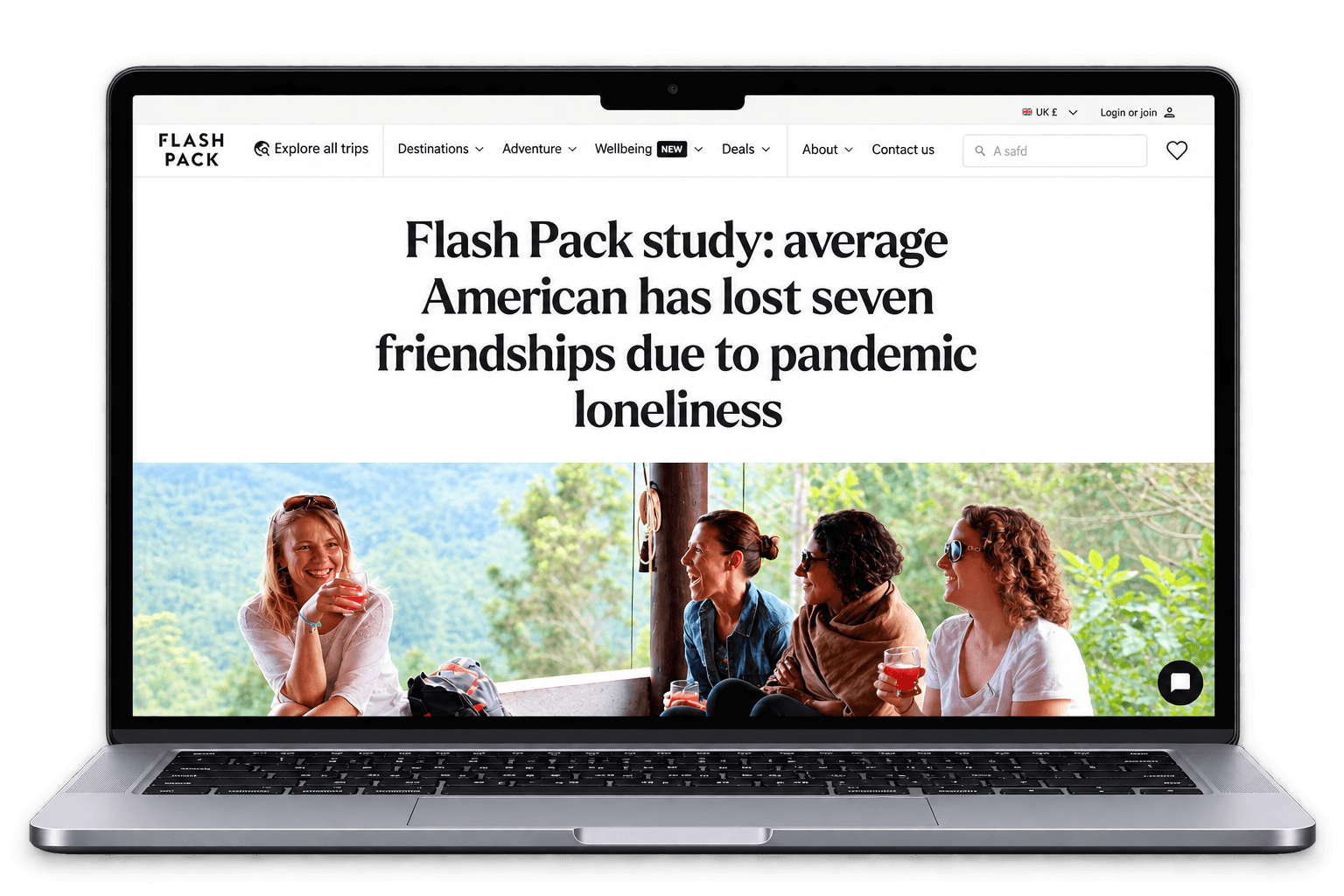
Solo travel is about more than where someone wants to go.
For many people, it’s also tied to bigger questions around friendship, connection and what happens to our social lives as we get older.
Flash Pack has taken those questions and turned them into something worth investigating in their own right.
Flash Pack specialises in small-group adventures for solo travellers, particularly people in their 30s and 40s.
Rather than limiting its marketing to destinations, itineraries and the benefits of group travel, the company has commissioned proprietary research into subjects closely connected to the lives of its audience, including friendship, loneliness and social connection.
That research gives Flash Pack something original to talk about.
Instead of simply commenting on trends using information available to everyone else, the business can investigate questions particularly relevant to the people it serves and publish what it discovers.
The output isn't another argument for taking a Flash Pack trip. It's new information about the audience and the wider social context in which the product exists.
The questions Flash Pack explores can matter whether or not someone is planning a holiday.
Friendships changing as people move through adulthood, finding new social connections and experiencing loneliness aren't travel problems. They're life problems.
But they're particularly relevant to an audience of people travelling solo and potentially looking for new experiences and connections with others.
That means the research can help someone understand something about their own life, their peers or a wider social shift they're experiencing.
The value comes from discovering something they didn't know before, not from being persuaded to book a trip.
Flash Pack gets something most travel marketing doesn't create: proprietary knowledge.
Once the business has commissioned the research and gathered the findings, it has evidence and insights that aren't simply available to every competitor searching the same public sources.
That gives it material for reports, editorial content, PR, social discussion and wider conversations around solo travel and connection.
More importantly, it can strengthen Flash Pack's authority around the audience it serves.
Rather than only saying, “We understand solo travellers in their 30s and 40s,” the business can contribute original evidence about what is happening in their lives.
Flash Pack's trips bring solo travellers together through shared group experiences.
Its research explores some of the social dynamics that make that proposition relevant in the first place: friendship, connection, loneliness and the changing ways adults form relationships.
The research therefore doesn't need to prove that somebody should book a Flash Pack trip.
Its role is further upstream.
It helps Flash Pack understand and contribute to conversations around the human need sitting behind part of its proposition.
If someone later becomes interested in travelling solo while meeting other people, Flash Pack isn't simply another company selling group itineraries. It may already be a business they've encountered through a subject that matters to them personally.
Unlike a campaign that disappears when the spend stops, original research leaves the business with evidence it owns.
The findings can be revisited, compared over time, developed into future studies and used across multiple parts of the business.
Repeated research can become even more valuable.
One study gives Flash Pack a set of findings. A continuing programme could allow it to observe how attitudes and behaviours change, creating a body of knowledge around its audience that becomes harder for competitors to reproduce quickly.
The accumulating asset isn't simply content.
It's understanding.
Plenty of travel businesses publish trend articles.
Most are built from the same ingredients: search data, industry reports, social trends, third-party statistics and observations already circulating elsewhere.
Flash Pack changes the source of the information.
Instead of asking, “What can we say about solo travellers?”, it can ask, “What could we discover about solo travellers that isn't already known?”
That distinction matters.
The business is no longer only interpreting the market. It is creating information that can add something to the market's understanding of itself.
And that opens a very different First Mile opportunity for an independent operator.
A business that repeatedly serves a particular type of traveller often sees patterns outsiders don't. It hears the same concerns, watches the same decisions being made and learns things about its customers simply through operating every day.
The opportunity is to ask whether some of that privileged understanding could be turned into original evidence that is useful to the audience itself.
You don't necessarily need Flash Pack's research budget to do that. The defensible advantage begins with having access to a question, audience or insight that your business is unusually well placed to understand.
Flash Pack shows how a travel business can turn what it uniquely understands about its audience into knowledge that has value beyond the product itself.
Eurail shifts the source of that value again. Instead of the business creating the knowledge, it gives travellers a way to contribute what they discover, turning individual experiences into something useful for the people who come after them.
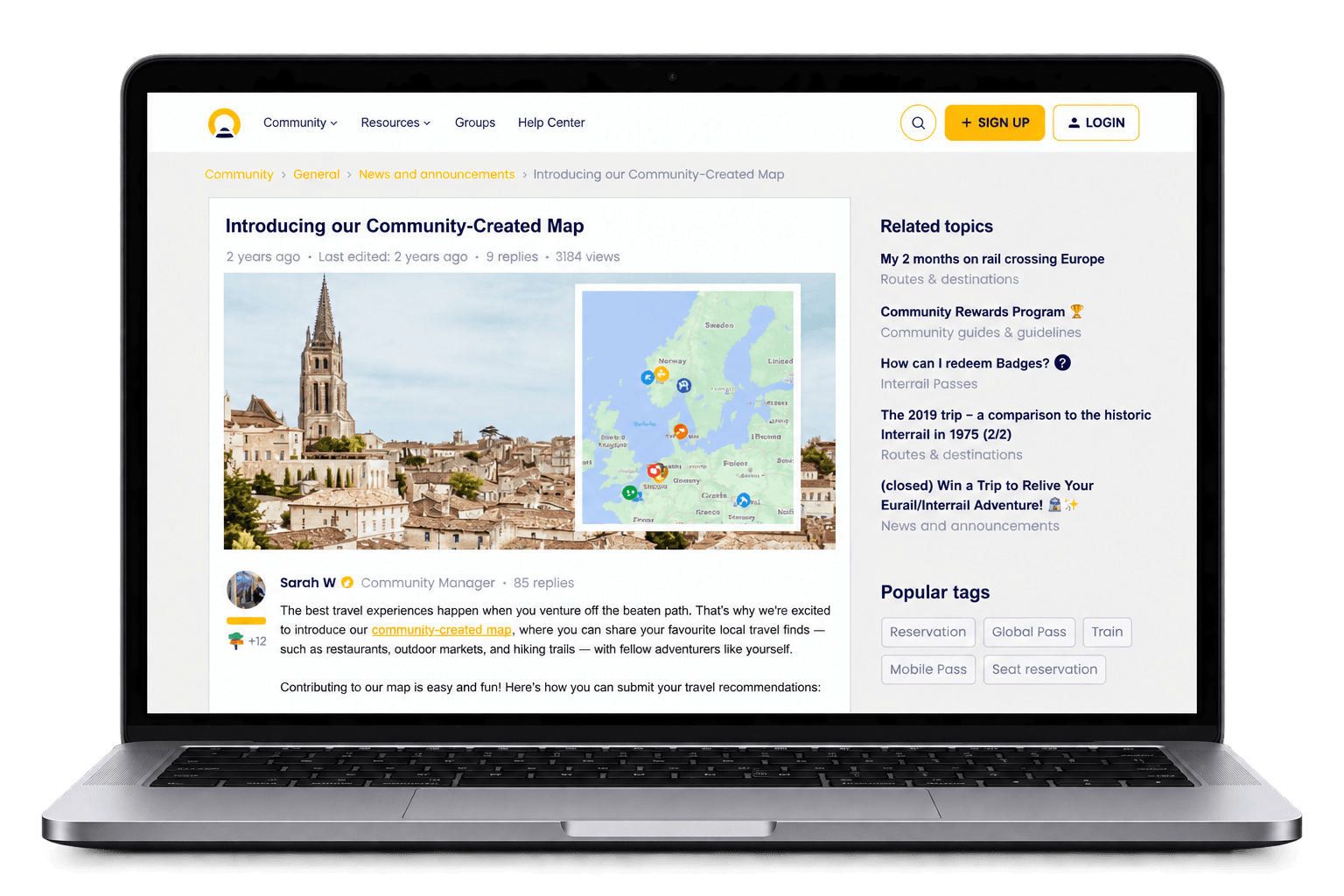
Some of the most useful travel recommendations don’t come from the business at all.
They come from other travellers. The places they stumbled across, the things they’d recommend and the discoveries they made along the way.
Eurail has found a way to capture those individual recommendations and turn them into something the wider community can use.
Eurail created a community map built from recommendations and discoveries contributed by travellers using its rail network.
Rather than the map being populated entirely by Eurail's editorial team, travellers can add places they found along the way: local spots, things to see, places to eat and other discoveries they think fellow travellers should know about.
Each contribution is relatively small.
But together they create a growing resource shaped by people who have actually travelled through the destinations and routes other Eurail customers are considering.
Eurail provides the structure. Its community helps create the value inside it.
Some of the most useful travel recommendations don't come from official destination guides.
They come from someone saying, “When you're there, don't miss this.”
That's the type of knowledge a community-created map can capture.
For someone planning a rail trip, it provides discoveries from people who have already made similar journeys and encountered places along the way.
And because the recommendations come from other travellers rather than being entirely selected by the business, the resource can surface the smaller, more personal discoveries that might never make it into a conventional destination guide.
The traveller gets something practical: a richer pool of ideas for their own journey.
Every useful contribution can make the resource more valuable for the next traveller.
That changes the economics of creating the resource.
Eurail doesn't have to research, write and continually originate every recommendation itself. It creates the structure through which the knowledge distributed across its customer base can be collected and made useful.
It also gives past customers a role after their own journey has finished.
Instead of the relationship ending when the rail pass expires, their experience can contribute something to the journeys of future travellers.
The connection is natural because the recommendations exist around the journeys Eurail enables.
People use Eurail to move through Europe by train. Along those journeys they discover places, experiences and destinations. The community map captures some of those discoveries and makes them available to people considering their own trips.
The resource therefore makes the world surrounding the product more useful.
It doesn't need to repeatedly tell someone why they should buy a rail pass. It can help them imagine what they might actually discover if they travelled that way.
And as more journeys produce more contributions, previous customers can make the planning experience richer for future ones.
This is where the model becomes particularly interesting.
A traveller takes a journey once, but something they discover can remain useful after they've returned home.
Each contribution adds another small piece to a shared resource. Over time, those contributions can accumulate into something no individual traveller, and potentially no small internal content team, could create alone.
The asset isn't simply the map itself.
It's the growing body of first-hand knowledge contributed by the community around it.
And unlike a campaign whose value largely ends when the activity stops, every useful contribution has the potential to make the resource richer for the next person.
Most travel marketing treats the customer as the audience.
Eurail gives them another role: contributor.
That's the important shift.
Travel businesses already sit on enormous amounts of distributed knowledge. Guests know the cafés they loved. Walkers know the viewpoints that surprised them. Tour customers remember the small discoveries that never appeared in the itinerary. Past travellers have recommendations future travellers would value.
Usually that knowledge disappears into individual memories, reviews, social posts or conversations.
The opportunity is to create somewhere for it to accumulate.
That doesn't mean every operator needs a community map.
The broader question is whether customers know things through experiencing your product that would be genuinely useful to the people who come next, and whether the business could create a structure that turns those individual contributions into a shared asset.
In that model, marketing isn't simply something the business continually produces for its audience.
Part of its value is something the audience helps build.
Nine very different businesses. Nine very different executions.
A course. An accessibility dataset. A public museum. An artist residency. Audio tours. Online learning. Wildlife programming. Proprietary research. A community-created map.
But the formats aren’t really the interesting part.
Underneath them are different strategic choices about where a travel business can create value before someone is ready to book.
Byway removes some of the complexity standing between someone and slow travel. Wheel the World turns an important claim into evidence travellers can actually use. 21c lets people experience part of its proposition without becoming a guest. Ace uses resources inside the business to enable others to create something valuable. Rick Steves gives away a useful piece of the experience itself.
Context turns expertise normally embedded in the experience into something valuable in its own right. Natural Habitat Adventures builds around the passion that creates demand for its trips in the first place. Flash Pack turns what it understands about its audience into original knowledge. And Eurail gives its customers a way to create something useful for the travellers who come after them.
None of those ideas needs to be copied literally.
The useful part is understanding the strategic thinking underneath them, then asking what the same thinking could unlock inside a very different travel business.
And when you strip away the formats and look at what these nine businesses are actually doing, six distinct strategies start to emerge.
That’s where we’ll go next.
The point of these examples isn’t to suggest that you should build a museum, commission a major research study or create your own version of somebody else’s idea.
It’s to look underneath what they built and ask what the same thinking could unlock inside your business.
Because the scale might change considerably, but the underlying opportunity often doesn’t.
An independent operator might not have the resources of some of the businesses we’ve looked at. But you still have expertise travellers don’t have. Questions you hear repeatedly. Things you know about your customers. Relationships and access others don’t have. Parts of the experience people could value before they buy. And things your audience cares about long before they start looking for a trip.
So let’s bring some of those ideas down to a more achievable scale and look at what they could actually become.
Sometimes the desire is already there. Something is simply making the traveller unsure whether they can actually do it.
That could be confidence, complexity, unfamiliarity, fitness, skills or simply not knowing what to expect.
Take a specialist walking operator.
They might regularly hear from people who love the idea of a multi-day walking holiday but have never done one before. They don’t know whether they’re fit enough, how they should prepare, what equipment they really need or what walking for several consecutive days actually feels like.
Instead of answering those questions individually, the operator could turn that knowledge into a free interactive “Your First Multi-Day Walk” guide.
It could include:
Someone could work through it without ever booking a holiday.
But they would leave with something useful: a much clearer understanding of what a multi-day walking trip involves, how to prepare for one and whether it feels achievable for them.
For the operator, the same questions the team repeatedly answers have become a reusable resource that demonstrates their expertise and helps more people feel capable of entering the category.
The opportunity isn’t the interactive guide itself.
It’s recognising that something repeatedly standing between an interested traveller and the experience could potentially be solved before the booking conversation even begins.
Ask yourself: What repeatedly stops interested travellers from feeling confident enough to participate?
Sometimes the problem isn’t that a traveller doesn’t understand the experience. It’s that an important claim is difficult to judge until they’ve already made the decision.
Take a small family-focused accommodation operator that describes its properties as “baby-friendly.”
That phrase could mean almost anything. A cot and high chair might technically qualify, but parents travelling with a baby may need to think about everything from blackout and noise to food storage, bathing, laundry and whether they can actually put the baby to sleep without sitting silently in the same room for the rest of the evening.
Instead of simply explaining why its own accommodation is baby-friendly, the operator could create a practical “Is It Really Baby-Friendly?” checklist that parents can use when evaluating any accommodation.
It could cover:
The traveller gets something useful even if they never stay with the business: a much better way to evaluate accommodation for their first or next trip with a baby.
For the operator, the same resource creates a much higher standard against which “baby-friendly” can be judged. And if its own properties have been designed around those considerations, it can demonstrate that through the same framework rather than simply asking people to believe the claim.
The opportunity isn’t the checklist itself.
It’s recognising when your category relies on vague claims that matter to travellers, and using your experience to give people a better way to judge those claims for themselves.
Ask yourself: What important claim in your category could you help travellers evaluate properly, whether they ultimately buy from you or not?
Sometimes the strongest way to communicate what makes an experience valuable is to let people experience a meaningful piece of it for themselves.
Take a specialist food tour whose guides have spent years building relationships with traders at a local market.
Rather than simply publishing another guide to the market, the operator could create a free self-guided “30 Minutes in the Market” experience that anyone can follow independently.
It could include:
Someone visiting the city could use the experience and have a richer half-hour in the market without ever joining the paid tour.
For the operator, it gives people direct experience of something that makes its tours valuable: the relationships, stories and local knowledge that turn walking through a market into understanding it.
The free experience doesn't replace the full tour. It gives someone a small, self-contained piece of that value while leaving the deeper guided experience, personal interaction and wider exploration for the paid product.
The opportunity isn’t the self-guided tour itself.
It’s identifying whether there is a meaningful piece of your paid experience that could stand on its own and improve someone’s trip even if they never become a customer.
Ask yourself: What part of the experience you sell could you make genuinely useful or enjoyable on its own, before someone ever pays for the whole thing?
Some travel businesses contain expertise that only becomes visible once someone has paid for the experience.
Take a specialist archaeology tour operator whose trips are led by archaeologists and historians with years of first-hand knowledge.
Instead of keeping that expertise within the tours, the operator could create a free monthly online series called “How Archaeologists Read The Past.”
Each session could explore a specific question with one of its experts:
Someone interested in archaeology could join from home and learn something genuinely worthwhile without having a trip planned or ever travelling with the operator.
For the business, it gives people direct access to the depth of expertise normally contained within its tours. Rather than simply describing its trips as “expert-led”, it demonstrates what spending time with those experts is actually like.
And if someone eventually decides they want to experience these places firsthand, there is a natural connection between the knowledge they have already valued and the people who could help them explore it in person.
The opportunity isn’t the online series itself.
It’s recognising when knowledge sitting inside your business could be valuable to people independently of the travel experience it normally comes packaged with.
Ask yourself: What does your business know that people would genuinely want to learn from even if they had no trip planned?
Sometimes the strongest opportunity sits one level underneath the activity itself.
Take a whale-watching experience provider. Its customers might only go whale watching once every few years, but their interest in whales and marine life exists regardless of whether they have an experience booked.
Instead of only communicating around upcoming trips and sightings, the operator could create a free monthly “What’s Happening In Our Waters” live briefing led by its marine guides.
It could include:
Someone interested in marine life could tune in every month without ever buying a whale-watching experience.
For the operator, it creates a reason to maintain a relationship with people around the passion that ultimately makes its experience desirable. And because the material comes from what its guides are actually seeing and learning on the water, it has something distinctive to contribute rather than simply publishing generic wildlife content.
The opportunity isn’t the monthly briefing itself.
It’s identifying the interest that exists underneath what you sell and asking whether your business has something genuinely valuable to contribute to that interest even when nobody is looking to book.
Ask yourself: What do your customers care about long before, between and after the moments when they might buy from you?
Some travel businesses repeatedly see things that travellers, publishers and general-purpose AI simply don’t.
That might come from operating in the same environment every day, watching conditions change, answering the same questions or seeing how an experience differs depending on when and how someone does it.
Take a canyoning provider operating across several routes in the same region.
Its guides spend season after season in those canyons. They know how each one changes throughout the year, when water levels make particular sections more challenging, which routes feel exposed, where people tend to struggle, how cold conditions actually feel and which canyon tends to suit different levels of confidence.
Instead of leaving that knowledge inside the guide team, the operator could build a public “Canyon Conditions Atlas.”
For each canyon, it could combine:
Now someone doesn't just get another guide to canyoning.
They get a resource built from information that only exists because this particular business repeatedly operates in those places.
A traveller could use it even if they eventually canyon with somebody else, choose a different route or simply want to understand local conditions before deciding whether canyoning is for them.
For the operator, every trip can add another layer of first-hand knowledge to something competitors cannot instantly reproduce. AI could explain canyoning or summarise publicly available information about a route. It cannot independently know what this operator's guides observed in that canyon yesterday, how conditions have changed across hundreds of trips or where their customers consistently struggle under different conditions.
And the longer the operator maintains it, the harder that knowledge becomes to replicate.
The opportunity isn't the atlas itself.
It's recognising that operating a travel business gives you access to observations the wider internet doesn't necessarily have, and asking whether those observations could become useful knowledge for travellers rather than disappearing at the end of each experience.
Ask yourself: What does your business repeatedly see, experience or learn first-hand that someone outside the business would struggle to know?
By this point, you might already have a few ideas for what a First Mile investment could look like in your business.
But an interesting idea isn’t necessarily one worth building.
Before committing time, budget and attention to it, there are three things worth looking at.
The strongest opportunities often begin with something the business is unusually well placed to contribute.
That might be expertise inside your team. First-hand operating knowledge. Things you repeatedly learn from customers. Proprietary data. Relationships with particular people or communities. Access to places or experiences. An existing audience. Or observations gathered simply by doing what you do every day.
You don’t necessarily need to invent something completely new.
Start by asking:
What do we know, see, have access to or have relationships with that others don’t?
Then look at the idea from both sides of the exchange.
For the traveller:
Would they genuinely value this before they’re ready to book? Does it help them do, understand, experience, decide or participate in something they care about? And would it still have value if they never bought from you?
For the business:
Does it connect naturally to what you ultimately sell? Does it demonstrate something meaningful about why someone might choose you? Could it reasonably influence familiarity, trust, capability, preference or future demand?
Then there’s the practical reality.
Can you build it well with the time, budget and people available? Can you maintain it? And does it draw on something distinctive enough that a competitor, or increasingly an AI tool, couldn’t reproduce most of the value in a few minutes?
If those answers are weak, the idea probably needs more work.
Finally, ask what the business is left with once the initial interaction is over.
Maybe you’ve turned expertise into reusable intellectual property. Captured knowledge that previously lived inside people’s heads. Created original evidence or data. Built new relationships. Grown an audience around a shared interest. Created a useful resource people can return to. Or given customers a way to contribute something that becomes more valuable over time.
Not every worthwhile First Mile investment needs to become a permanent asset.
But the strongest examples we’ve looked at tend to leave something behind.
That gives you one final question before deciding whether something deserves investment:
If we spend the time and money to build this, what will we have afterwards that we don’t have today?
If there’s a strong answer to that, alongside genuine traveller value and a natural connection to the business, you may have something worth pursuing.
The next step is turning that opportunity into something real.
The ideas in this guide aren’t meant to become another list of things your marketing team should be doing.
The point is to look at your business differently.
To notice the expertise, knowledge, access, relationships and first-hand experience you already have. To understand where those things could create genuine value for travellers before they’re ready to book. And then to decide which opportunities are actually worth investing in.
That’s where the work moves from First Mile Thinking to implementation.
An opportunity needs to become a concept. The concept needs to become something people can actually use, experience or engage with. And whatever gets built needs to make sense for the business behind it.
That’s the role we see for First Mile Creative.
We’re a strategic creative studio for independent travel operators, bringing marketing thinking and creative execution together.
We help identify promising First Mile opportunities, develop the strategy and concept behind them, and then bring those ideas to life through design and creative.
Depending on the opportunity, that might mean developing a new brand-led initiative, creating a useful resource or experience for travellers, building an editorial or content platform, or designing the campaigns and creative assets that introduce it to the world.
In practice, that means thinking through what’s worth building, why a traveller would care and how it creates value for the business, then translating that thinking into something distinctive, useful and beautifully designed.
Because First Mile Thinking isn’t about abandoning the marketing that helps generate bookings today.
There will always be campaigns to launch, offers to promote, capacity to fill and targets to hit.
It’s about making sure that isn’t the only place your marketing is working.
About creating things that give travellers a reason to discover you, spend time with you, learn from you, trust you or experience something of what makes your business valuable before they’re actively comparing their options.
So when the booking moment eventually arrives, you’re not always starting from zero.
We hope this guide has given you a few new ways to think about what that could look like for your business, and perhaps an idea or two worth exploring.
And if you have any questions or want to explore how we can help you put some of these ideas into practice, feel free to get in touch.